
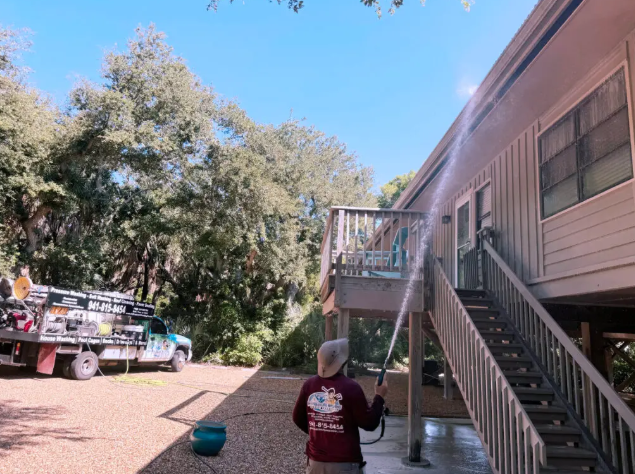
Five myths about exterior cleaning that homeowners keep believing

More pressure is not better. That single misconception causes more damage to home exteriors than dirt ever will. Yet it persists, passed along between neighbours and reinforced by hardware-store displays of ever-more-powerful machines. The truth about keeping a building’s exterior clean is less intuitive, and getting it wrong is expensive.
Exterior cleaning sits in an odd spot. It looks simple enough to skip professional help, but technical enough that mistakes leave permanent marks. Let’s take apart the five beliefs that lead people astray, one by one.
Myth one: a higher PSI means a better clean
The most stubborn myth equates power with results. A consumer pressure washer from Kärcher or a big-box retailer can exceed 2,000 PSI, and many people assume that more force simply means more dirt removed. In reality, force and cleaning are only loosely related. Most exterior grime, the kind made of algae, mildew and atmospheric film, responds to the right cleaning solution and dwell time, not brute force.
Crank the pressure on vinyl siding and you risk forcing water behind the panels, where it lingers and breeds mold. On wood, a strong jet shreds the surface fibres. On aged paint, it strips coating in uneven patches. This is exactly why thorough cleaning services by Entretien Squidgee and other established operators lean on soft washing for delicate surfaces rather than maximum pressure. The chemistry does the work; the water just rinses.
See also: Cryptocurrency Market Opportunities in FinTech
Myth two: exterior dirt is purely cosmetic
The second belief treats a dirty exterior as a vanity problem, something to address only before guests arrive. That underestimates what is actually growing on the surface. The dark streaks on a north-facing wall are usually algae and mildew, living organisms that hold moisture against the material.
On a roof, those black streaks come from a hardy algae that feeds on the limestone filler in asphalt shingles. Left alone, it shortens shingle life. On siding, trapped moisture works into seams and softens whatever lies behind. Dirt, in other words, is rarely just dirt. It is often an active process of degradation that cleaning interrupts.
Myth three: rain washes everything anyway
Some homeowners reason that since rain falls on the house regularly, nature handles the cleaning for free. Rain does rinse loose dust, but it does almost nothing about bonded grime. Algae and mildew anchor themselves to surfaces; a passing shower does not dislodge them. If anything, frequent moisture without drying feeds the very growth people hope it removes.
The pattern is easy to confirm. Look at the underside of a soffit or a sheltered corner that rain never reaches directly. It is often filthy. Now look at a fully exposed wall that has weathered years of storms. Still streaked. Rain redistributes water; it does not clean.
Myth four: you only need to do it when it looks bad
Waiting until a surface looks visibly dirty is a reactive habit, and it backfires. By the time staining is obvious from the street, the organisms have been established for a long time. Some discoloration becomes permanent, etched into porous materials that will never fully recover their original appearance.
Regular light cleaning prevents that buildup from ever reaching the point of no return. A wall washed before the algae digs in stays in good shape with minimal effort. A wall washed only once it looks bad demands aggressive treatment and still may not come fully clean. The reactive approach costs more work for a worse result.
Myth five: any cleaning method works on any surface
The final myth assumes one technique fits everything. It does not. Brick, vinyl, aluminium, stucco, painted wood and composite decking each respond differently. A method that safely cleans concrete will gouge cedar. A solution that brightens vinyl may discolour certain stones.
Siding manufacturers such as CertainTeed publish care guidelines precisely because the wrong approach voids warranties and ruins finishes. Matching method to material is where experience earns its keep. Knowing when to switch from pressure to a gentle chemical wash, and at what dilution, separates a clean finish from an expensive repair.
Myth six: it is a once-and-done job
A bonus belief deserves a place here because it quietly props up all the others: the idea that exterior cleaning is something you do once and then forget. People schedule it like a renovation, a discrete event with a clear end. Surfaces do not work that way. The moment a wall is clean, the slow process of recolonization begins again.
Algae spores travel on the wind and settle on any damp, shaded surface. Pollen returns every spring. Atmospheric film from traffic and heating accumulates continuously. None of this stops because a house was cleaned last summer. The clean state is temporary by nature, which is exactly why interval matters more than intensity.
This reframes the whole task. Instead of asking how thoroughly to clean once, the better question is how often to clean lightly. A surface kept on a steady schedule never accumulates the kind of buildup that demands aggressive treatment in the first place. The work stays easy precisely because it is repeated.
It also changes how people budget. A single large cleaning every few years feels cheaper but invites permanent staining between sessions. Smaller, regular maintenance spreads the cost, protects the materials and avoids the dramatic before-and-after that signals a surface was allowed to decline too far.
The seasonal rhythm matters too. In a climate with hard winters, the smart windows are spring and fall: spring to clear what winter left behind, fall to prepare surfaces before snow and ice arrive. Cleaning on that cadence keeps organisms from gaining a foothold during the warm, damp months when they grow fastest.
What the myths have in common
Trace these five beliefs back and they share one root: the idea that exterior cleaning is a blunt, one-size task you do occasionally with as much force as possible. Every part of that picture is wrong. Cleaning is selective, chemical more than mechanical, preventive rather than reactive, and specific to each surface.
The homeowners who get the best results think less about scrubbing harder and more about choosing the right method at the right interval. They treat the exterior of a building as a system that degrades slowly and quietly, one that rewards steady attention and punishes both neglect and overzealous force.
Replace the myths with that mindset and the payoff is real. Surfaces last longer, finishes stay intact, and the house holds its value. The goal was never a single dramatic clean. It was a building that ages well because someone understood how to care for it.